
-
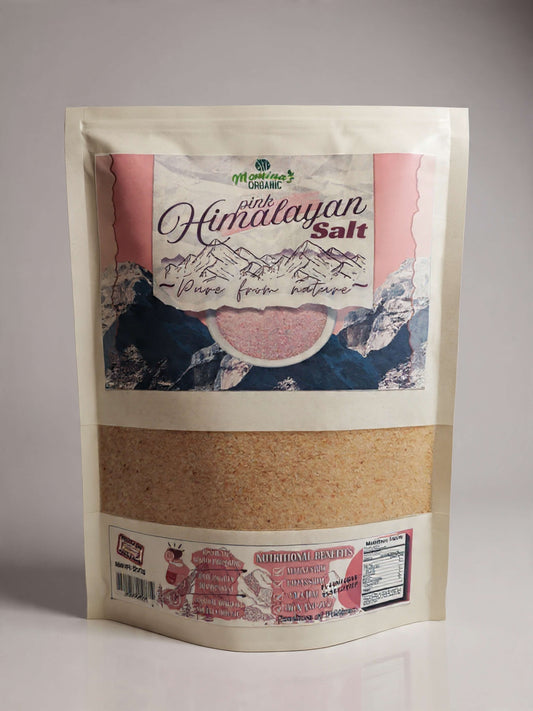
Momina's Organic Pink Himalayan Salt — Pure Mountain Salt
Regular price Rs.249.00 PKRRegular priceUnit price Rs.498.00/kg -
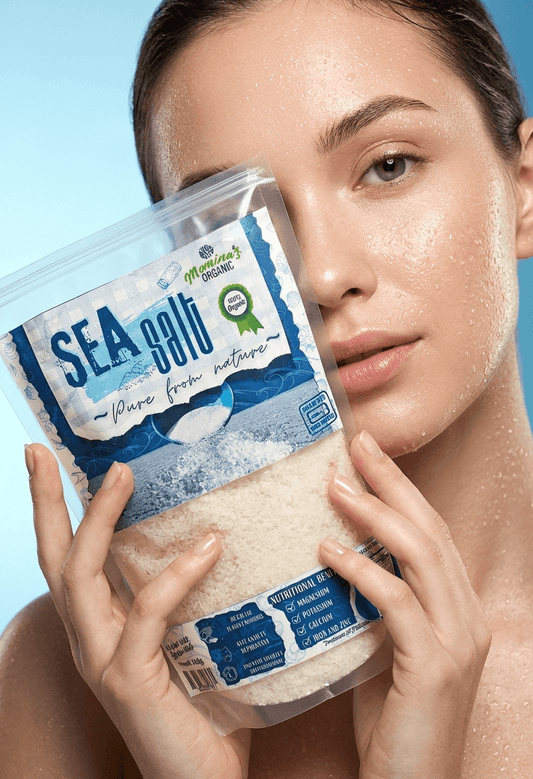
Organic Sea Salt (Samundri Namak) — Pure & Naturally Harvested
Regular price Rs.170.00 PKRRegular price


Organic Salt FAQs — Pink Himalayan Salt & Sea Salt in Pakistan
Momina's Organic offers two premium natural salt varieties — Pink Himalayan Salt sourced from the Khewra Salt Mines of Pakistan, and Sea Salt (Samundri Namak) harvested from natural coastal waters. Both are free from anti-caking agents, artificial additives, and industrial bleaching. Each variety has a distinct mineral profile and flavour suited to different cooking and health needs.
Bottom line: Two varieties — Pink Himalayan Salt for mineral richness, Sea Salt for everyday natural cooking.
Pink Himalayan salt is considered the more mineral-rich option. Sea salt retains natural iodine and is better suited as an everyday cooking salt. Both are significantly cleaner than commercially refined table salt.
Bottom line: Himalayan for minerals and finishing, sea salt for everyday cooking — both far superior to commercial table salt.
Yes — genuine pink Himalayan salt is exclusively mined from the Khewra Salt Mines located in the Jhelum district of Punjab, Pakistan. The Khewra Salt Mine is the second largest salt mine in the world and one of the oldest, with deposits estimated to be over 500 million years old. Despite being marketed globally as "Himalayan" salt, its actual geographic origin is entirely within Pakistan — making Momina's Organic pink salt a truly locally sourced Pakistani product.
Bottom line: Pink Himalayan salt is 100% Pakistani — mined from the Khewra Salt Mines in Punjab, one of the world's oldest and largest salt deposits.
Research suggests that natural unrefined salts such as pink Himalayan salt and sea salt retain trace minerals that are removed during commercial salt refining. According to USDA FoodData Central, commercial table salt is approximately 97–99% sodium chloride with added anti-caking agents such as sodium aluminosilicate or calcium silicate. Natural unrefined salts contain a broader mineral profile including magnesium, potassium, and calcium in trace amounts. The World Health Organization notes that while the mineral differences are modest at normal serving sizes, the absence of chemical additives makes natural salt a cleaner everyday choice.
Bottom line: Natural salt is cleaner and more mineral-complete than commercial table salt — the difference is in what it does not contain as much as what it does.
Pink Himalayan salt contains naturally occurring iodine but in amounts significantly lower than iodised commercial table salt. Sea salt contains slightly more natural iodine than Himalayan salt due to its marine origin. The World Health Organization recommends iodised salt as the primary dietary source of iodine in regions where iodine deficiency is common. If you switch to natural unrefined salt as your primary salt, consider supplementing iodine through other dietary sources such as dairy, eggs, seafood, or iodine-rich vegetables.
Bottom line: Natural salt has low iodine — if switching from iodised table salt, ensure you get iodine from other dietary sources.
Strictly speaking, salt is a mineral and cannot be certified organic in the traditional agricultural sense — it does not come from a living organism. When a salt is labelled organic or natural, it refers to the absence of industrial processing, chemical additives, anti-caking agents, and artificial bleaching rather than a certified organic farming process. Momina's Organic Salt uses the term to indicate that our salt is in its natural, unprocessed, additive-free state — exactly as it comes from the earth or sea.
Bottom line: Organic salt means additive-free and unprocessed — not agriculturally certified, but genuinely clean and natural.
The World Health Organization recommends consuming less than 5 grams of salt per day for adults — approximately one teaspoon. Excessive sodium intake is associated with increased risk of high blood pressure and cardiovascular strain. Natural unrefined salts like Himalayan and sea salt contain the same sodium chloride as table salt and should be used in similar moderation. The advantage of natural salt is not in consuming more of it but in avoiding the chemical additives present in commercial varieties.
Bottom line: Less than 5g per day regardless of salt type — natural salt is cleaner, not a licence to use more.
Some studies suggest that mineral-rich salt solutions may support skin hydration and barrier function. Pink Himalayan salt is commonly used in bath soaks, scrubs, and skin treatments due to its magnesium and trace mineral content. A 2005 study published in the International Journal of Dermatology found that magnesium-rich salt solutions improved skin hydration and reduced inflammation in participants with dry skin conditions. Topical use in a diluted salt scrub or bath soak is a well-established traditional practice across South Asia and is generally safe for most skin types.
Samundri Namak (سمندری نمک) is the Urdu name for sea salt in Pakistan, literally meaning "ocean salt." It is harvested through the natural evaporation of seawater rather than mined from underground deposits. Compared to commercial table salt, Samundri Namak retains its natural mineral content and is free from anti-caking chemicals. Its slightly briny, full-bodied flavour makes it particularly well suited for everyday Pakistani cooking, pickling, and preserving.
Yes — natural sea salt and Himalayan salt are both excellent for pickling and preserving. In fact, natural salt without anti-caking agents is preferred for pickling because anti-caking additives in commercial salt can cloud the brine and interfere with the fermentation process. Sea salt is particularly well suited for pickling due to its clean flavour and natural mineral content. Use non-iodised natural salt for fermentation — high iodine levels can inhibit beneficial bacteria in fermented foods.
Store natural salt in a dry, airtight container away from moisture and direct sunlight. Because natural salt contains no anti-caking agents, it may clump when exposed to humidity — particularly in Pakistan's warm, humid climate. This clumping is completely normal and does not affect quality or flavour. Simply break up any clumps before use. A small piece of food-grade silica or a few grains of dry rice in the container can help absorb excess moisture.
Bottom line: Airtight, dry, away from humidity — natural salt stores indefinitely and clumping is normal, not a defect.
Look for salt labelled additive-free, anti-caking agent-free, and unrefined. For pink Himalayan salt specifically, verify that it is sourced from the Khewra Salt Mines in Pakistan — not imported repackaged product. Momina's Organic offers both Pink Himalayan Salt and Sea Salt (Samundri Namak), both sourced naturally and free from all additives. Available online with delivery across Pakistan.
Bottom line: Buy unrefined, additive-free salt from verified Pakistani sources — and confirm Himalayan salt origin is Khewra, not imported.
100% natural and unrefined. No anti-caking agents. No artificial additives. No industrial bleaching. Pink Himalayan Salt sourced directly from Khewra Salt Mines, Pakistan. Sea Salt naturally harvested from clean coastal waters. Packaged to preserve natural mineral content and freshness. Pure salt — nothing added, nothing removed.
People with high blood pressure are generally advised to reduce overall sodium intake regardless of salt type. According to the World Health Organization, excess sodium consumption is a leading dietary risk factor for hypertension and cardiovascular disease. Natural unrefined salt contains the same sodium chloride as commercial table salt and does not offer a significant advantage for blood pressure management in terms of quantity. However, the absence of chemical additives and a broader mineral profile — particularly the trace magnesium and potassium content in Himalayan salt — may provide modest complementary support as part of an overall low-sodium diet. Anyone managing high blood pressure should consult their doctor regarding daily sodium limits.
Bottom line: Natural salt does not lower blood pressure — but its trace mineral content and additive-free composition make it a cleaner choice within a controlled sodium intake.
Black salt — known as Kala Namak in Pakistan — is widely used in chaat masala, raita, and traditional digestive remedies due to its sulphur content. Pink and white salts are better suited for everyday cooking and general use. All three are significantly more natural than commercially refined iodised table salt.
Bottom line: Pink for minerals, white for everyday cooking, black for chaat and digestion — each has a distinct role in Pakistani cooking and wellness.